Showing posts with label exercise. Show all posts

Tuesday, September 2, 2014

Five Simple Tests For Long-Term Wellness

Fitness testing is the pinnacle of every Perfect Personal Training program:  It warns us of impending health problems that you might not feel or see, and lets us compare to what's normal for long-term health.

Below are just five of the many clinical fitness tests which help us to identify risks and implement the necessary changes:
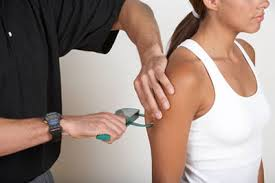
Body Composition:  Gaining weight and losing weight never really tells the story of what's happening with your actual fat mass.  Body composition (or body fat testing) does! 

Decades of research tell us where your body fat percentage should be for long-term cardiorespiratory health, and this test is an excellent predictor of health outcomes.


Pushup Test:  This test is more important than it may seem, as it provides indicators of muscle imbalances, core weakness, standing balance deficits, and joint problems in the shoulders, wrists and elbows.  Those with poor scores on the pushup test are more likely to lose upper body mobility throughout the years, and are more prone to shoulder and back pain.


Apley's BackScratch Test:  This is a flexibility test administered to determine several factors associated with shoulder health and stability, as well as scapular placement and movement.  If your shoulders and scapulae aren't quite working properly, then this test will provide insight as to corrective measures so you don't lose mobiliy or comfort as you age.

Step-Tests & Walking-Tests: While there are many different versions of each Step-test and Walking-test, the goal is always the same:  Determine risk of cardiovascular disease by assessing the comparative strength of the heart and lungs.  By comparing these results to statistically-sound data, we're able to predict your liklihood for disorders relating to heart disease.

Passive Straight-Leg Raise:  Hip and knee problems can often be attributed to problematic muscles surrounding them.  This test assesses the flexibility of the hamstring muscles (back of upper thigh) and allows us to compare to healthy norms based on the muscles' performances.  Poor scores generally lead to back pain, reduced gait, balance issues and other movement disorders if left untreated by your PPT professional.


See how you score on these tests and many others!  Visit http://perfectpersonaltraining.com/signup.php to request your free consultation & health/risk assessment with a Perfect Personal Trainer.

Sunday, April 11, 2010

Creating New Brain Cells with Exercise

Faithful readers,

Perfect Personal Training would like to thank you for your trust in our wellness services. We're proud to stand apart from other health groups with our emphasis on science, careful progression, and personalized lifestyle change. Below is more emerging research that we'd like to share with you.

The Proceedings of the National Academy of Sciences (PNAS) has shown that cardiovascular exercise stimulates the growth of new brain cells and thereby improves the memory and the ability to learn. The dentate gyrus part of the hippocampus is one of just a few areas of an adult brain that is capable of creating new cells, and cardiovascular exercise has, indeed, been found to stimulate such creation.

Similar studies have also demonstrated that the normal decline in brain tissue (of 15% - 25% from age 30 to 90) is also very slowed with aerobic exercise. Memory loss, impaired learning, and other deficiencies associated with age all seem to be battled with regular, appropriate cardiovascular work.

It is to be noted that other forms of exercise, such as flexibility exercises, may or may not have this same effect, as they were not part of these studies.

For precise care in selecting appropriate methods and intensities for cardiovascular training, please schedule an appointment with a Perfect Personal Trainer.

Thanks for reading, and have a healthy and happy new week!

Tuesday, January 5, 2010

Workout Wellness Success for 2010


The NEW YEAR is here!
Are your resolutions underway?

All New Years Resolutions Programs are not created equal! Many are lacking in fundamental areas while others overtrain you and leave you run down.

Need a few pointers? Here are a few bulletpoints that will make your exercising top notch!

* Work out your cardiovascular system at a moderate or high intensity at least three or four days each week. Spend at least 20 or 30 minutes for health benefits, or 40-60 minutes for weight loss.

* Work out with weights at least twice per week or more if you have time. Training bands and tubes are just as good when used appropriately. Be sure to target all of your major muscles and that you use good form. A Perfect Personal Trainer can help you in selecting exercises that are right for you.

* Stretch your muscles after every workout and hold the stretch for 30-60 seconds. If you do yoga, try to do some after your muscles workout.

* Keep lots of water or your favorite sports drink on hand for your workouts. You should also drink a glass or two before and after you train.

* Try not to workout on an empty stomach or right before bed.

* Eat small meals several times a day to boost your metabolism and burn more fat in your workouts. If you are trying to lose weight then consult a professional and consider limiting your consumption to around 250-300 calories each time you eat.

* Don't forget to workout your core! The muscles in the middle of your body should not be left out.

Do you have any questions for us? We're always here to help! (877)698-DO-IT (3648)

Happy New Year and Good Luck with your Resolutions!

Sunday, December 20, 2009

A Frenzy of Fitness Products

Happy holidays, readers!

Reaching your New Year fitness goals means a combination of nutrition, lifestyle modification, and exercise aimed at improving muscular and cardiorespiratory abilities. And, while the wide variety of available fitness products can all be helpful tools, it is important to remember that they are just that -- helpful tools, and nothing more. Achieving fitness and wellness is not about the products that you select, but about your strategy and its careful execution.

Advertisements for the Bowflex home gyms all claim to bring incredible results to their users. But, the Bowflex itself does not have the ability to do that. It is your ability to successfully target all of your muscles with appropriate intensity and duration, combined with your caloric intake and cardiorespiratory training, that will or won't lead to successful change. Don't be fooled -- nothing about the Bowflex will make your work out any more beneficial than training with free weights, bands, tubing, or other forms of resistive training. In fact, given the Bowflex's inability to properly accompany many body types, users of this product may be far better off relying on other (and cheaper) methods of getting fit.

The stability ball, and many Ab Rollers, Ab Crunchers, and similar devices that are aimed at targeting the "belly area" are even more guilty of misrepresenting their value. While these devices can be used to effectively develop more core musculature and balance, training the midsection's muscles has nothing to do with burning body fat.

This is also a good time to reference the dumbbell collections that are aimed at womens' fitness. Usually sold as a case of dumbbells of varying resistances under ten pounds each, these sets are sometimes promoted as being all that is needed for a body sculpting, muscular work out. In truth, these dumbbells won't take most women very far in their pursuits. After the first few weeks or so of regular use, it is rare that these dumbbells will be heavy enough to progressively train the major muscles of a woman's body.

Keep the following information in mind when planning your exercise sessions: First, be sure that you are selecting complimentary modalities. Then, concern yourself with the frequency, intensity, and duration of everything you do. When these factors are properly addressed, it won't matter what devices you select, but how well you stick to your progressive regimen.

Questions? Feel free to call (877)698-DO-IT (3648) or leave us a comment below!

Tuesday, December 1, 2009

Prevent & Treat Muscle Cramping

Though this article does not directly relate to fat loss, muscle cramping is very common in people of generally low fitness levels, and therefore serves this blog well.

First, let's define what a muscle cramp is: Muscle cramps occur when a muscle tightens and shortens. Several causes include:
- Weak, inflexible muscles
- Dehydration and electrolyte imbalances
- Poor circulation and/or oxygenation of the muscles
- Being in an environment of extreme temperature

Prevention & Treatment
  • If you are not getting the recommended three days per week of strength training or the five days per week of cardiovascular training, then this is a good start. Also, the duration, modality, and intensity of your exercises may be partially responsible.
  • Consider your total body water (TBW). Most of us require roughly 1/2 to 1 ounce of water, per pound of bodyweight, per day. This means that a 150-lb person should be consuming roughly 75 ounces to 150 ounces of water each day. Caffeine drinkers should aim even higher, as should those exercising very strenuously for very long periods of time. Without the right amount of water, your muscles cannot be as healthy as they need to be to prevent cramping and other problems.
  • Another big concern is the flexibility of your muscles. It is not enough to just perform a few random stretches from time to time. Stretching should involve all major muscles for 20-60 seconds each, and should be performed nearly every day. Never stretch to the point of pain, but do stretch to the point of mild discomfort. Consult your Perfect Personal Trainer for more details and specificity regarding muscular flexibility.
  • Consume less than 2,400 mg of sodium each day. Some health groups recommend even fewer than 1,600 mg, especially for those with high blood pressure. However, it is important to note that too little salt/sodium can also lead to muscle cramping. Perform an assessment of your usual sodium intake and compare to these values to determine if this may be a factor.
  • Consume roughly 3,500 mg of Potassium daily. While a more specific recommendation will vary based on your gender and age, this is often a useful starting point, as low amounts of potassium are often contributors to muscle cramping. Seek the advice of a dietitian to more accurately determine your own needs.
We hope that you have found this helpful. Please note that following these recommendations may not lead to immediate results, and that you should always consult a physician before implementing a major change in exercise or diet.

Tuesday, July 28, 2009

Defining Nutrition

Keywords: Fat loss, Body weight, Lose weight

Losing weight means "eating healthy", right?

Let's think about this....

Apples are healthy. Avacados are healthy. Rice is healthy.

But, would a meal of these three foods always equate to fat loss?

Today's lesson is a short one: "Health" and "losing bodyfat" are not the same thing. In fact, they are often greatly opposed to one another. Separate the way you see the two: "Healthy" food choices don't have to lead to fat loss or vice versa.