Showing posts with label perfect personal trainer. Show all posts

Tuesday, September 2, 2014

Five Simple Tests For Long-Term Wellness

Fitness testing is the pinnacle of every Perfect Personal Training program:  It warns us of impending health problems that you might not feel or see, and lets us compare to what's normal for long-term health.

Below are just five of the many clinical fitness tests which help us to identify risks and implement the necessary changes:

Body Composition:  Gaining weight and losing weight never really tells the story of what's happening with your actual fat mass.  Body composition (or body fat testing) does! 

Decades of research tell us where your body fat percentage should be for long-term cardiorespiratory health, and this test is an excellent predictor of health outcomes.


Pushup Test:  This test is more important than it may seem, as it provides indicators of muscle imbalances, core weakness, standing balance deficits, and joint problems in the shoulders, wrists and elbows.  Those with poor scores on the pushup test are more likely to lose upper body mobility throughout the years, and are more prone to shoulder and back pain.


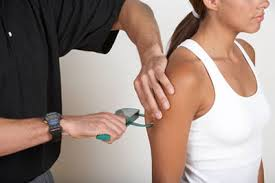
Apley's BackScratch Test:  This is a flexibility test administered to determine several factors associated with shoulder health and stability, as well as scapular placement and movement.  If your shoulders and scapulae aren't quite working properly, then this test will provide insight as to corrective measures so you don't lose mobiliy or comfort as you age.

Step-Tests & Walking-Tests: While there are many different versions of each Step-test and Walking-test, the goal is always the same:  Determine risk of cardiovascular disease by assessing the comparative strength of the heart and lungs.  By comparing these results to statistically-sound data, we're able to predict your liklihood for disorders relating to heart disease.

Passive Straight-Leg Raise:  Hip and knee problems can often be attributed to problematic muscles surrounding them.  This test assesses the flexibility of the hamstring muscles (back of upper thigh) and allows us to compare to healthy norms based on the muscles' performances.  Poor scores generally lead to back pain, reduced gait, balance issues and other movement disorders if left untreated by your PPT professional.


See how you score on these tests and many others!  Visit http://perfectpersonaltraining.com/signup.php to request your free consultation & health/risk assessment with a Perfect Personal Trainer.

Friday, March 30, 2012

Can Healthy Living Compensate for Bad Genetics?

Let's face it -- some people are just plain lucky.  They indulge in unhealthy habits, get little quality exercise, and somehow, they live a long life, predominantly free of chronic disease.  Others, of course, were dealt a bad hand, genetically.  Some of you have high blood pressure, even though your lifestyle is pretty healthy.  Others have cholesterol numbers that are off the charts, even though your cholesterol intake really isn't all that bad.  And, of course, some have larger bone structure and lower metabolic rates, naturally.

The good news is that, despite heredity, our day-to-day decisions have a whole heck of a lot more to do with what happens to us than our genetic inheritence does!  We can and should fight back against congenital disorders or problems that "we were born with". 

Below is a bulletpoint list of very attackable problems with real solutions.  These sugestions are meant as a jumping-off point, and we encourage you to contact us (or comment below or on our Facebook page) to further personalize your solution(s):

Slow metabolism:  "I've never really been skinny."  "No matter what I do, I always have a big butt."  "I've tried diet and exercise, but I'm always bigger-framed no matter what I do."
Surprisingly, many foods and herbs go a long way in boosting metabolism.  We'll be posting more on this in a future blogpost, but a good start are foods like kelp and grapefruit, as well as items such as hot peppers and acai berries, have all been shown to improve metabolism.  Including these into your daily regimen along with precise, personalized strength training (you don't need the gym -- it can all be done at home) will greatly improve your metabolism to the tune of burning or keeping off an extra five or six pounds per month!

High cholesterol:  Sure, some of us have to work a little bit harder than others to keep our cholesterol ratio in check.  But, solid exercise alone will elevate your "good cholesterol" as long as you're employing the right F.I.T.T. principles... This means the FREQUENCY, INTENSITY, TIME SPENT, and TYPE/SELECTION of each exercise have to be close to ideal for you to really get the benefit you need to improve your good cholesterol.  A moderate walk, alone, won't do it!  And, of course, replacing your higher-cholesterol foods with veggies and fruits of the right caloric make-up will bring down your "bad cholesterol".  Regardless of your predisposition, what you do will make a far bigger difference than what you inherited.

Hypertension:  Did you know that just a small piece of dark chocolate every day will bring down your systolic (top number) blood pressure value?  Did you also know that supplementing with Coenzyme Q10 has been shown to help reduce blood pressure, also?  And, if you think you're already getting ebnough cardio, then think again:  Five days per week of 20-60 minutes are recommended for controlling blood pressure as well as cholesterol and other risk factors for heart disease.

Dementia:  If dementia runs in your family, then you may believe that there isn't much you can do to prevent it.  Fortunately, that isn't true!  Dementia is preventable by consuming fish regularly (a small amount each day seems to show the most promise, or supplementing with fish oil tablets in quantities of 1-3grams per day.)  Additionally, moderate-to-high cardiovascular training go a long way in defeating dementia also.  In general, a healthy diet rich in anti-oxidants, steady aerobic exercise, and a good night's sleep are key ingredients to preventing the onset of this horrible disease, even as you reach your 80s, 90s or beyond.

Osteoporosis:  Don't let a family history of this devastating disease make you think that you're a sitting duck!  The right nutrition, water consumption, and progressive strength training regimen are all you'll need to keep your bones strong at ANY age.  The trick is to know the right amounts of calcium and vitamin D to be consuming for you and your activities, and to have a resistive program that is just enough to improve your bones without damaging your muscles or joints.  An exercise professional with a strong background in bone maintenance will craft the right program for your needs, and you'll see your T-score improving a little bit more every few months, regardless of what your bloodline says.

Heart disease, arthritis, poor balance, and most others disorders have fairly simple answers, also!  Please call us (877-698-3648), email info@perfectpersonaltraining.com, or post your questions on our Facebook page or in the comments area below.  There are solid solutions for you and for your family; we just need to put in the time to look at your lifestyle and medical history, and assess your needs for better living and reduced risk.

Have a safe and wonderful weekend, everyone!

Saturday, April 23, 2011

Five Quick & Easy Fitness Opportunities You're Missing Out On

If achieving greater preventive health and fitness was as easy as a few minutes per day, then wouldn't you take those few extra minutes to improve yourself and reduce risk for debilitating disease?

Below are five quick and easy ways to make yourself healthier and more energetic, with a very small time commitment:

#5.  Perform 30-60 seconds of a front plank exercise.

This exercise is rarely contraindicated for those of normalized blood pressure and spinal health, making it a generally safe, effective method of improving core muscles, balance, and posture.  Please breathe regularly while you hold this position, and be sure to check with your physician to be certain that there are no health concerns regarding this or any other exercise.


#4.  Divide your bodyweight (in lbs) by two.  This number is, roughly, your recommended amount of daily water intake (in ounces).  On days of heavy sweating, high juice or tea intake, or prolonged cardiovascular or strength training, then this number should be much higher.

#3.  Stretch your major muscles any time that you can -- during phone calls, television time, or whenever you find yourself available to perform  some stretching.  Twenty seconds or longer is usually sufficient for improving joint and muscular health and flexibility.  This may even help you to prevent muscle aches and cramps, and to sleep more soundly.

#2.  Consume green teas, green vegetables, beans, and other high-anti-oxidant foods and drinks.  Just adding one more serving to each day can make a tremendous difference in your health and wellness.

And the #1 easy fitness opportunity to aim for each day:  Devote more time to cardiovascular training!  Just 20 minutes per day is often sufficient for greatly reducing risks for heart failure, stroke, and heart attack.  If twenty minutes per day isn't attainable for you, then keep in mind that even five or six minutes each day is helpful at improving long-term cardiac function, and will burn roughly forty to eighty calories for most people.

There you have it!  As always, we recommend consulting a top-certified and degreed Perfect Personal Trainer for specific, personalized exercise science and nutrition.  Have a great Easter weekend!

Sunday, December 19, 2010

Marathons Lead To Heart Impairment

Happy holidays, faithful readers!

Running over 26 miles is viewed as one of the great physical challenges in endurance competition. Health science repeatedly shows us that when it comes to athletic competition, a healthy assessment of risks vs benefits is vital in securing safety.

In a recent study from HealthDay News (October 25, 2010), 20 recreational runners with a mean age of 45 underwent MRIs of their hearts before, immediately after, and three months after running in a marathon. Researchers compared the information found to baseline tests of cardio-respiratory fitness and blood chemistry.

The most disheartening finding was impairment in just over half of the muscle in the left ventricle during the race. However, because overall heart function did not decline as a result, it is believed that the non-impaired section of the left ventricle picked up the slack.  The specific types of impairments found were not noted.

The most promising finding was that the more well trained the runner was, the least impaired his/her heart became. It was found that having an aerobic capacity, or VO2max, of 50 ml/kg/min (roughly 14 METs) or higher was best for preventing this left ventricle impairment.

Why does this happen?  According to an interview with the authors, it is speculated that acute inflammation and dehydration were the cause of these problems.  It is important to note that in all 20 participants, heart muscle function returned to normal by the follow-up scan at the three month mark.  (The exact recovery rates are not known.)  While this does not negate the severity of the health risks associated with left ventricle impairement, it is helpful to see that these risks were relatively short-lived in this study.

If you are considering running a marathon, half marathon, or any other race, your Perfect Personal Trainer will gladly implement an appropriate, progressive, and personalized regimen to go about minimizing risks to your heart or other muscles, while improving your run's time and maximizing your enjoyment of the competition!

Sunday, November 7, 2010

Top 5 Ways to Stay Slim at Thanksgiving

We've all made the comments and jokes about gaining fat as a result of the Thanksgiving holiday.  As our focus shifts to family plans and relaxation, we tend to sacrifice our fitness focus, resulting in body fat gains and a reduced feeling of confidence, not to mention an increased risk of cardiovascular disease.

So, here they are -- the top five methods of preventing body fat gains while still enjoying your Thanksgiving holiday.  Enjoy!

#1 - Perform just five additional minutes of aerobic exercise every other day, from now through Thanksgiving.  If you start today, then by Thanksgiving, you'll have burned roughly 500-800 more calories than usual, making more room for some indulgence at Thanksgiving.
#2 - Consume at least ten 8-ounce glasses of water each day, especially during the few days prior to Thanksgiving.  This will help to reduce your appetite, so you'll feel content with fewer calories.
#3 - Go skinless:  Removing the skin from your turkey will help you cut down on additional calories and fat, without reducing the pleasure of eating.
#4 - Enjoy and savor every bite.  This has a physiological effect on your body that will actually make you feel more "full" with less food and drink.  Chew slowly, and enjoy your food.
#5 - Make a decision now to limit yourself to one small dessert selection and one glass of alcohol.  Enjoy them while they last, but then shift your mental focus to the company of your family and friends, consuming more water if you need something to curb your appetite.

Please post any questions below, or call us at (877)698-3648.  Perfect Personal Trainers are eager to help!

Tuesday, September 7, 2010

The Fad Diet Solution

Hello, readers!

With another holiday weekend now behind us, we have to ask:  Did you make poor food selections?  And, more importantly, did you overconsume calories?

It's times like these that people start considering any of the number of fad diets out there...

Low carb, high carb, low fat, no fat, cookie diet, pure liquid, and one of the recent worst -- the “egg, vinegar, and water diet” -- all have some potential for weight loss over a moderate amount of time, but with unhealthy physiological risks.  It is important to remember that weight loss shouldn't carry risky side effects.  Low carb diets, for example, are especially dangerous because the dieter is cutting out the body’s main energy source.  As another example, low fat diets are dangerous because they minimize the body's ability to absorb and utilize vitamins.  Trading one health problem for another is no way to get things done. And, if you are doing some unhealthy for your body, the symptoms won't be obvious.  While you may feel just fine during a fad diet, there may be some dangerous underlying issues that you are not aware of.
So, before considering one of these fad diets at any point in the future, we suggest that you rely on tried-and-true science, using the labels' serving sizes as helpful quantity guides. Below is a list of foods and their respective serving sizes from The American Heart Association and the government's food pyrimid.  These suggestions are recommended for their cardiovascular health benefits as well as their ability to help maintain adequate body fat.  Not only will you be on the road to heart attack prevention, but these will help you to maintain energy levels while minimizing your body fat!  Have a look and compare to your current diet diary...

Below are the recommended daily number of servings for a 150-180 lb person:

Vegetable Servings Per Day:  3-7 Servings
Examples of a serving:
  • ½ cup of cooked vegetable
  • ½ cup raw vegetable
  • 6 ounces or ¾ cup of vegetable juice
Fruit Servings Per Day:  2-3 Servings
Examples of a serving:

  • 1 medium fruit (apple, orange, banana)
  • ¼ cup of dried fruit (raisins, prunes, etc.)
  • 6 ounces or ¾ cup of fruit juice
  • ½ cup canned, frozen, or cooked fruit
  • ½ cup raw fruit
Whole Grain Servings Per Day:  6-11 Servings
Examples of a serving:

  • 1 slice of bread
  • About 1 cup of ready-to-eat cereal flakes
  • ½ cup of cooked cereal, rice or pasta
Dairy Servings Per Day:  3 Servings
Examples of a serving:

  • 1 cup of milk or yogurt
  • 1-½ ounces of natural cheese (cheddar)
  • 2 ounces of processed cheese (such as American)
Legumes Per Day:  4-5 Servings
Examples of a serving:
  • ½ cup of cooked, dry beans
  • ½ cup of tofu or 1 ½ -ounce soy burger
  • 2 tablespoons of peanut butter
  • 1/3 cup of nuts
These are important considerations when meal planning.  As you can see, a "serving" is pre-determined, not necessarily the amount you can comfortably have in a sitting. 

We, at Perfect Personal Training, hope this helps as you plan your meals each day!  For more nutritional information, please comment below or send an email to info@perfectpersonaltraining.com.  Our staff of highly trained exercise specialists and nutritionists are always eager to help with your personalized lifestyle change.


Recommended for Joint Care: Bromelain -- Buy One, Get TWO MORE FREE

Saturday, July 31, 2010

Is BMI Obsolete?

Hello, faithful readers!

This may be our most important post of the last year -- especially for those of you with an unhealthy body composition.  We encourage you to read this posting and respond with questions or comments, as the information below may help revolutionize the medical approach to weight management.

Since PPT's inception, we've declared that the Body Mass Index (BMI) is an inaccurate method of evaluating one's risk for fat-related disease.  Our reasoning?  BMI does not determine any difference between a person's fat weight and lean tissue.  This means that if you were to gain ten pounds of hard-earned muscle while losing ten pounds of excess fat, your BMI would stay the exact same, and your doctor would likely tell you that your exercise efforts were not paying off in terms of fat loss.  Imagine that... You lose fat, gain muscle, and then hear that your BMI hasn't improved.  You'd be making tremendous progress, but you'd be likely to become discouraged from a lack of understanding.  Unlike our methods of body composition assessment (also called body fat percentage assessment), The BMI is a simple system that looks at fat, bone, water and muscle as all falling into one category:  weight.

The medical community has continued to rely on the BMI because of it's simplicity and ease.  And, for non-exercisers, it has some merit (until they begin exercising and gaining muscle, at which point it becomes misleading).  From its inception the Body Mass Index has been questioned for its numerous flaws, and other quick and easy means have been evaluated.  But finally, researchers from the University of Michigan seem to have something on the horizon that is just as simple, but that illustrates a more accurate assessment of health risk.
After assessing anthropometrics, or body circumferences in more than 1100 children ages 6 to 18, correlations were found between neck circumference and risk for later diseases such as obstructive sleep apnea, diabetes, or high blood pressure.  Whereas abdominal obesity is not taken into account with the BMI scale, it does seem to correlate quite well to these neck circumference measurements, thereby leading the researchers to feel that neck measurement would present a more meaningful value to patients than the BMI.

Neck circumference and risk stratification charts are not currently available, but should become so in the near future. In the meantime, rely on direct measurements of body fat (body composition) with your Perfect Personal Trainer, along with anthropometric measurements to predict risks to health and to assess proper lifestyle modification.

Learn more about your risk factors and the best ways to reduce them!  Call (877)698-DO-IT (3648) to speak with a Perfect Personal Trainer.  We're even happy to schedule a free consultation, right in your home or office, and to evaluate your risk factors for you and your family.

Friday, July 9, 2010

Back To Reality - The Holiday Is Over

Hello, faithful readers!

Yes, it's "back to reality" week as many of us have returned to work, returned home, and returned to our exercise regimen that was either abandoned or minimized during the long Independence Day weekend.

Many of you have emailed recently to say that your motivation was low. After all, we've just had two long weekends in the passed month, the kids are out of school, and we're enduring an exceptionally hot summer. And, for those whose goals included looking their best by summertime, the summertime is now here in full force, so those goals are no longer motivating or driving us like they were during the spring.

So, what's the solution? How do you find motivation for exercise and wellness during a scorching summer of vacations from work, and family trips?

First, we need to remember that what we're all doing with exercise goes far beyond your looks and confidence. If your level of sex appeal is your only motivator, then you're losing track of the other incredible benefits of well-programmed, personalized PPT exercise:

  • Stronger bones, so you're less likely to experience a fracture in your lifetime
  • Healthy, freely-moving joints, so you prevent or minimize osteoarthritis (yes, no matter how young you are, what you do today will greatly influence what happens down the road)
  • A strong, fully-functioning heart -- statistics show that without 20-60 minutes of cardiovascular training on most days of the week, one's chance of heart disease is very significantly higher
  • Improved cognitive function - have a look through our recent blogposts here for other related articles
  • De-stresser -- all forms of exercise help to battle the effects of stress as well as depression, thereby improving quality of life, the health of your skin (slow down those wrinkles!), sleep quality, and more
  • Longer life -- a maximally healthy lifestyle has been shown to outlive a minimally healthy one by two to three decades! That's more time with friends and family and a longer, more peaceful retirement!
  • And finally, you gain ENERGY through all forms of exercise... Loosen tight muscles and joints, improve circulation, and wake yourself up through safe, prioritized exercise... Why really on coffee and herbal stimulants when a simple calorie-burning workout can do so much more?
In short, if you want to grow older gracefully and with minimal time spent at your doctor's office, then your exercise needs to be consistent. Aside from the fat loss and muscle gains, you're doing your body a world of good by remaining on track with your exercise and nutrition regimen, regardless of the weather or your vacation time.  And, let's keep one more important fact in mind:  Each day away from well-designed exercise is a step backwards for your physical health.  We don't maintain our health by standing still, we slowly move backwards.
Need coaching? Call Perfect Personal Training, even if you're not a client, and one of our fat loss and Wellness experts will be happy to talk with you. With proper goal setting and slow and steady steps, there is nothing that you cannot do (and even enjoy!)